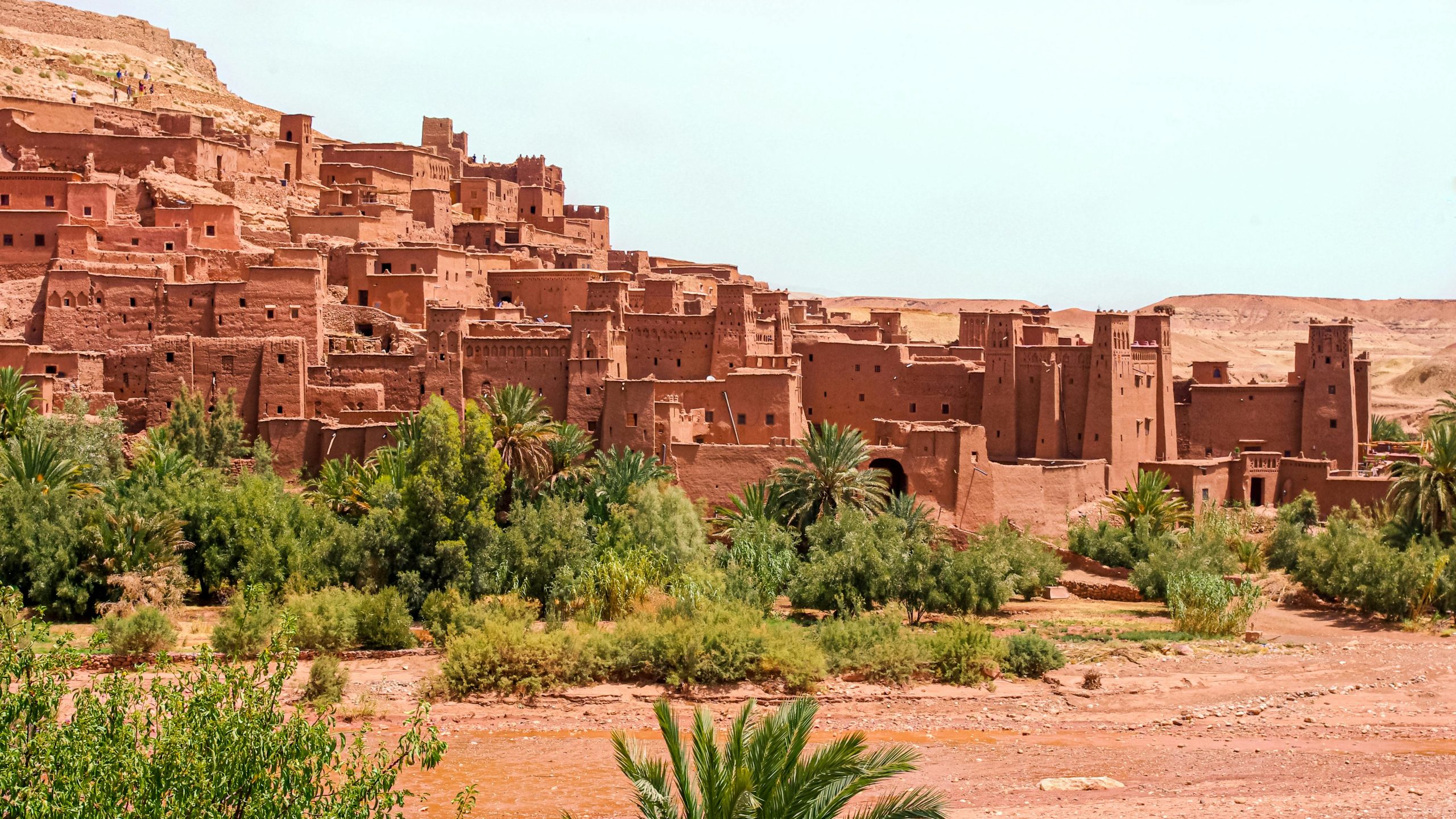
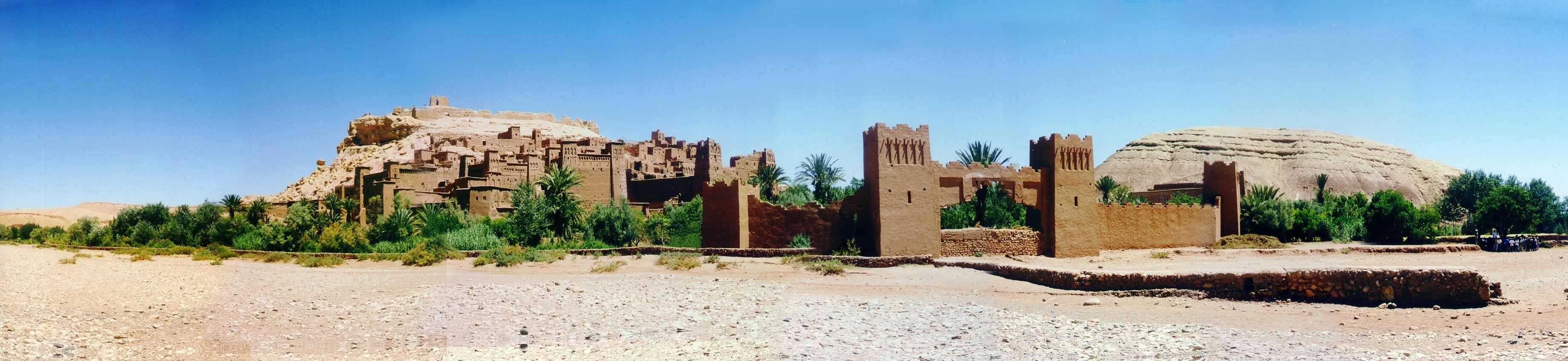
About 30 km from Ouarzazate, on the old caravan route between the Sahara and Marrakech, stands Ait Ben Haddou — a fortified village of earthen towers and stacked houses that has been on the UNESCO World Heritage list since 1987. It is the most photographed ksar in Morocco, and one of the easiest big sights to reach from Marrakech. Here is the honest guide.
What it actually is
A ksar is a fortified village — and Ait Ben Haddou is not a museum piece but a real village, still inhabited by a handful of families. The earthen architecture is pisé (rammed earth) and adobe brick: defensive towers at the corners of each kasbah, houses climbing the hillside, and a fortified granary crowning the summit, where the community once stored grain safe from raids.
Its wealth came from its position on the caravan route: gold, salt and slaves crossed here on the way from the deep Sahara to the markets of Marrakech. Most of what you see today dates from the 17th century or later, though the site is far older.
The film connection
If the silhouette looks familiar, that is because you have probably already seen it. Gladiator used the ksar for the scenes where Maximus is sold into slavery; Game of Thrones turned it into Yunkai, the city Daenerys liberates. Lawrence of Arabia, The Mummy, Kingdom of Heaven and Prince of Persia all shot here too — the Atlas Studios in Ouarzazate exist largely because of this valley.
The honest part: the “entrance fee” that is not
This is the thing every visitor should know: entering the ksar is free. It is a living village, not a gated monument — you simply walk in across the river bed.
At the car park and the footbridge, self-appointed “guides” regularly insist you must pay an entry fee or hire them for the visit. That is not true. A licensed local guide is genuinely useful — they will take you inside the kasbahs and explain the architecture — but it is optional and negotiable, never compulsory. A few restored houses and the granary viewpoint may ask a few dirhams; everything else is walk-in.
The same honesty applies to lunch: the restaurants directly facing the ksar charge tourist prices for an average tagine. The small family-run places inside the village — or simply asking your driver where locals eat — cost less and taste better.
How to visit it
The visit is simple: cross the river bed (a footbridge exists now; in spring you may hop across sandbags), then climb the lanes up through the village. The path winds between kasbahs — some open as small guesthouses, cooperatives or carpet shops — until you reach the granary at the summit, with the famous panorama over the palm grove and the Ounila valley.
Allow 1.5 to 2 hours for a relaxed visit with photos. And do climb to the top: the view is the point.
Getting there from Marrakech or Ouarzazate
- From Marrakech: roughly 180 km, about 3.5 to 4 hours over the Tizi n’Tichka pass (2,260 m) — a spectacular but winding road. Too far to improvise by grand taxi; the sensible options are a private day trip or a rental car.
- From Ouarzazate: only 30 km — an easy 30-minute drive if you are already in the region.
- On a desert tour: every Marrakech–Merzouga route passes the ksar, which is why most travellers see it on the way to the dunes rather than as a stand-alone trip.
Practical tips
- Go early or late. Tour buses arrive mid-morning; before 9:30 or after 16:00 the lanes are quieter and the light is better. Sunset from the top is exceptional.
- Shoes: the lanes are steep, uneven earthen paths — trainers or walking shoes, not flip-flops.
- Heat: there is no shade on the climb. From May to September bring water, a hat and sunscreen, and aim for the morning.
- The river crossing: after heavy rain the Ounila river can run high — your driver will know whether to use the bridge or the modern road entrance on the far side.
See it with us
Our 1-day trip to Ait Ben Haddou from Marrakech crosses Tizi n’Tichka, adds Telouet kasbah and the Ounila valley, and includes a local guide at the ksar — private vehicle, pick-up at your riad, prices on request.
Want more time? The 2-day tour to Ait Ben Haddou adds a sunset and a night next to the ksar, plus Ouarzazate and the Fint oasis. And if you are heading to the dunes anyway, our 3-day desert tour from Marrakech stops here on day one. Questions? Contact us.