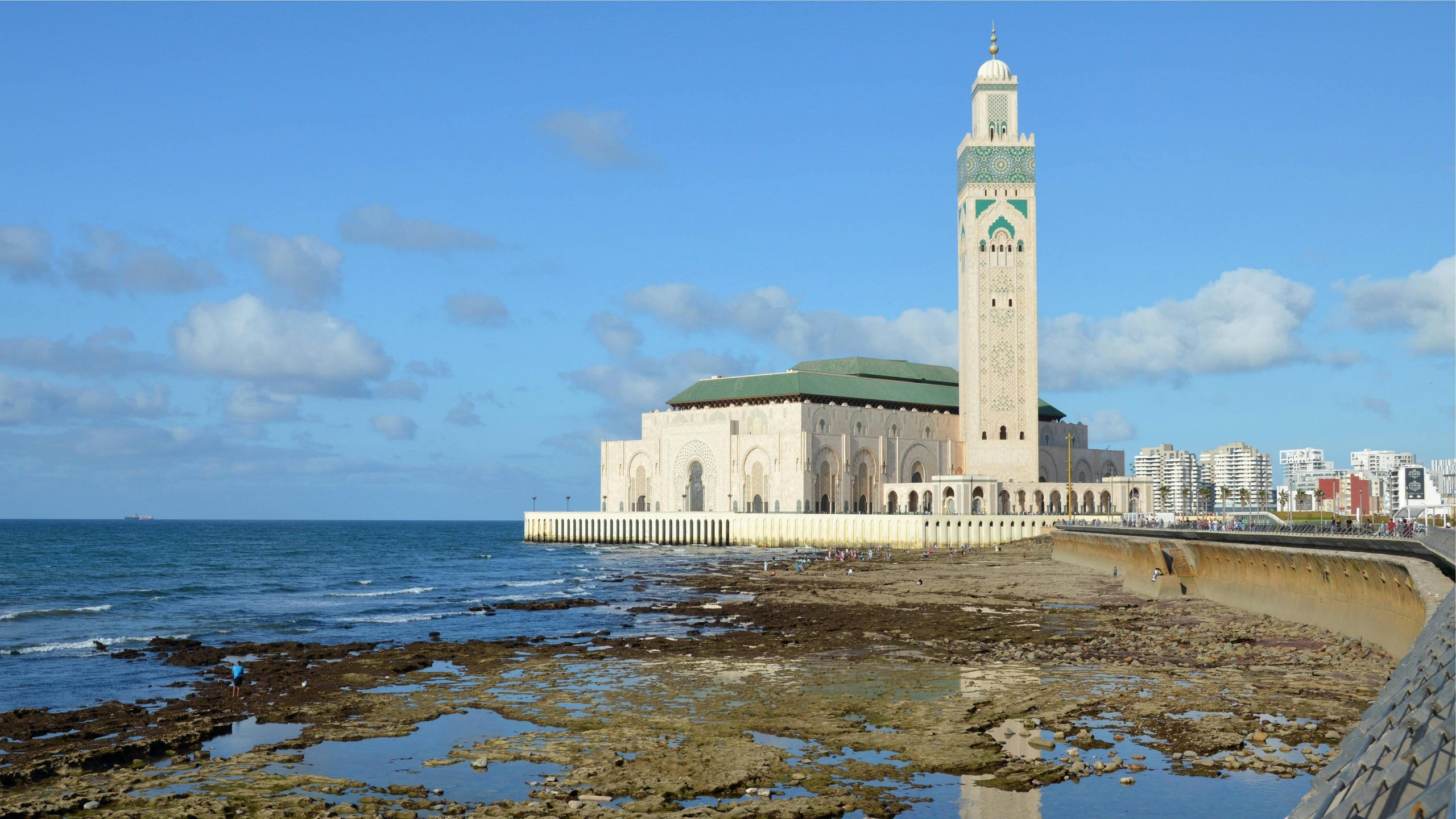
Casablanca is often the grand entry point for travelers arriving in Morocco, a bustling coastal metropolis where modern boulevards meet the historic charm of the Mauresque architecture. While the city itself offers striking sights like the monumental Hassan II Mosque, many visitors eager to experience the broader cultural tapestry wonder how feasible it is to venture beyond the city walls. For travelers with reduced mobility, the good news is that with a bit of strategic planning and the right transport, the central regions of Morocco open up remarkably well. Day trips from the economic capital allow you to experience ancient Roman ruins, royal capital grandeur, and tranquil coastal arts towns without sacrificing comfort or accessibility.
Rabat: Imperial Grandeur and Modern Accessibility
Located just 90 kilometers north of Casablanca—a smooth one-hour drive via the modern highway or a comfortable 50-minute train ride—Rabat serves as one of the most accessible imperial cities in the kingdom. Unlike the dense, labyrinthine medinas of older cities, Rabat’s layout features wide, French-colonial boulevards, expansive plazas, and meticulously maintained public gardens that accommodate wheelchair users with relative ease.
Begin your day at the majestic Chellah necropolis and Roman ruins. While parts of the ancient site feature uneven terrain, the main entrance and primary panoramic viewing platforms are accessible, offering breathtaking vistas over the Bouregreg River. From there, head toward the Mausoleum of Mohammed V and the Hassan Tower. This national landmark is remarkably progressive in its accessibility, featuring smooth stone paving, ramps bypassing the few steps, and wide, open courtyards that allow visitors to admire the intricate zellij tilework and imposing architecture up close.
For lunch, make your way to the marina or the historical Kasbah of the Udayas. While the steep, blue-and-white alleys of the Kasbah itself present significant challenges with steps and cobblestones, the adjacent Andalusian Gardens offer smooth, level pathways shaded by exotic palms and citrus trees, perfect for a relaxing afternoon stroll. Train tickets from Casablanca to Rabat cost approximately 40 to 90 MAD (4 to 9 EUR) depending on the class, while hiring a private accessible vehicle for the day typically ranges from 1,200 to 1,800 MAD (110 to 170 EUR).
El Jadida: Coastal Fortresses and Portuguese History
For travelers craving an Atlantic breeze and centuries of maritime history, El Jadida lies roughly 100 kilometers southwest of Casablanca, translating to a scenic two-hour drive along the coast. Formerly known as Mazagan, this UNESCO World Heritage site was fortified by the Portuguese in the early 16th century, offering a unique architectural blend of European military engineering and Moroccan tradition.
The undisputed highlight of El Jadida is the subterranean Portuguese Cistern. While the interior of the cistern requires navigating a flight of steps to enter, the surrounding Portuguese fortified city features wide, relatively flat ramparts and sea-facing bastions where visitors can take in sweeping views of the harbor and fishing boats below. The coastal promenade just outside the old fortress walls is wide, paved, and fully accessible, providing a refreshing spot to feel the ocean spray and watch local life unfold.
Navigating the inner town independently can be slightly bumpy due to historical paving stones, so a companion or private guide is recommended to help select the smoothest routes. Private transport from Casablanca for a round-trip excursion to El Jadida generally costs between 1,000 and 1,500 MAD (95 to 140 EUR).
Settat and the Moroccan Countryside: Authentic Rural Charm
If you wish to escape the coastal humidity and experience the authentic rhythm of Morocco’s agricultural heartland, a day trip inland toward Settat offers a refreshing change of pace. Situated about 80 kilometers south of Casablanca, Settat is easily reached via the Casablanca-Marrakech highway in just under an hour.
While Settat is not a traditional tourist hub, it provides an authentic glimpse into provincial Moroccan life, surrounded by the rolling plains of the Chaouia region. Visitors can explore the historic Ismailian Kasbah of El Borj, which features recently restored exterior grounds with improved pathways. The journey itself highlights the changing Moroccan landscape, transitioning from urban sprawl to vast fields of wheat, olive groves, and traditional farming communities. This trip is particularly ideal for travelers who prefer a relaxed pace away from massive crowds, focusing on comfortable scenic driving and leisurely dining at modern roadside establishments featuring traditional Moroccan hospitality and fully accessible facilities.
Navigating Morocco on Wheels: Honest Practical Advice
Traveling through Morocco as a wheelchair user requires careful preparation, as infrastructure standards vary significantly from Western Europe. While major intercity trains operated by ONCF offer dedicated spaces for wheelchair users, boarding assistance must be requested in advance at the station. Renting a standard vehicle in Morocco is rarely accessible, making private transport with an experienced local driver your best option for seamless day trips. Look for operators who can provide vans with spacious interiors. Furthermore, while modern upscale restaurants and major highway service stations are equipped with accessible western-style restrooms, older historical sites rarely feature modern accessible amenities, making advance route planning essential for a stress-free journey.
At Morocco Moment Tours, based in the heart of Fes, we specialize in crafting bespoke private journeys tailored precisely to your physical needs, pacing, and travel aspirations. Whether you wish to explore the imperial monuments of Rabat or design a custom coastal itinerary from Casablanca, our team ensures seamless logistics, reliable private transport, and genuine local insight every step of the way.