Planning a journey into the Erg Chebbi or Erg Chigaga dunes is often the emotional high point of any Moroccan adventure. Yet, when travelers browse options for their desert overnight, a massive pricing chasm appears. You will see basic nomadic-style setups advertised for modest sums, while luxury desert camps command rates comparable to high-end boutique hotels in Marrakech. As a local specialist based out of Fes, I am constantly asked whether the upgrade is genuinely worth it, or if it is merely an exercise in paying for vanity. The truth, as is often the case in travel, lies somewhere in the middle, defined entirely by your personal comfort threshold and travel style.
The Geography of the Sand: Where You Are Heading Matters
Before comparing camp amenities, it is essential to understand the logistics of reaching the Sahara from major cultural hubs like Fes. A journey from Fes to the dunes of Merzouga is an epic full-day drive of approximately 460 kilometers, taking roughly seven to eight hours via the Middle Atlas mountains, the cedar forests of Azrou, and the dramatic Ziz Valley.
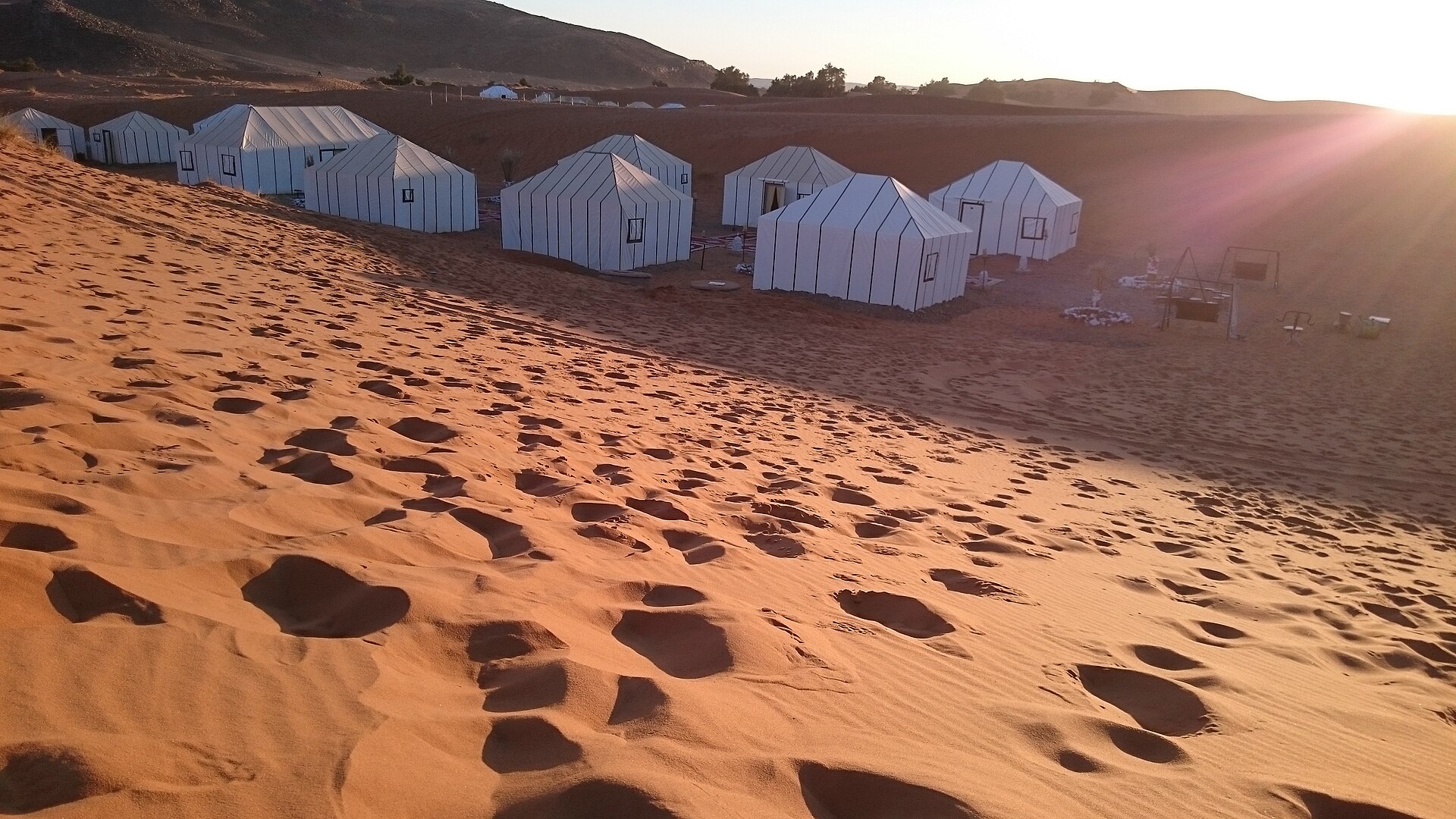
Because of this immense distance, your choice of desert camp dictates how you recover from the road. Basic camps are typically situated closer to the outer periphery of the dunes, sometimes a 20-to-30-minute camel trek or 4x4 ride from the tarmac village of Merzouga or Hassi Labied. Luxury camps often push deeper into the interior of the Erg Chebbi erg, positioning themselves amidst towering, silent dunes far away from the light pollution of settlements. If your priority is absolute solitude under a pristine night sky, the deeper geographical placement of upper-tier camps offers a distinct advantage.
Inside the Tent: Accommodation, Climate Control, and Infrastructure
The most dramatic variance between basic and luxury options is structural. Understanding what your dirhams actually buy in terms of shelter prevents unpleasant surprises upon arrival.
Basic camps—often styled after traditional Berber wool tents—offer an authentic, rustic experience. You can expect a sturdy canvas structure furnished with floor mattresses, heavy wool blankets, and traditional rugs. Electricity is usually limited; expect a central communal area where you can charge devices via solar generators before the camp goes dark around midnight. Bathrooms are almost always shared, consisting of basic flush toilets and bucket showers or communal block facilities with solar-heated water, which can run cool if you are among the last to wash up after sunset. Ballpark pricing for these standard nomadic experiences generally ranges from 300 MAD to 600 MAD (approx. 30 EUR to 60 EUR) per person, often bundled into desert excursion packages.
Luxury camps, by contrast, function as five-star boutique hotels dropped onto the shifting sands. These canvas suites feature solid wooden flooring, king-size beds with crisp Egyptian cotton linens, traditional Moroccan decor, and running water. Crucially, true luxury camps feature private en-suite bathrooms equipped with hot water showers, flushing Western toilets, and artisanal vanity products. Climate control is another major differentiator: luxury tents are insulated and equipped with electric heating units or air conditioning, which is essential given that desert temperatures fluctuate wildly, dropping to near-freezing in winter and soaring past 40 degrees Celsius in mid-summer. Expect nightly rates for high-end camps to range from 1,800 MAD to well over 4,500 MAD (approx. 170 EUR to 420+ EUR) per tent, depending on the season.
Dining and Evening Entertainment Under the Stars
Food in the Sahara is traditionally hearty, but the delivery and culinary breadth vary significantly between camp tiers.
At a basic camp, dinner is typically a communal affair served inside a large dining tent. You will likely be treated to a classic chicken or vegetable tagine cooked over gas or charcoal, accompanied by fresh bread, soup, and seasonal fruit. It is simple, filling, and comforting after a long day in transit. Entertainment consists of traditional drumming around a central campfire under the Milky Way, performed by your nomad hosts, followed by stargazing.
Luxury camps elevate the dining experience to a fine-dining standard. Meals often feature multi-course menus starting with Moroccan salads, followed by slow-cooked lamb tagines with prunes and almonds, or even modern fusion dishes, paired with bottled mineral water and sometimes Moroccan wine or beer (note that basic camps rarely hold alcohol licenses, whereas licensed luxury camps will stock a selection for purchase). Breakfasts at luxury camps are expansive spreads featuring fresh smen-buttered pancakes, eggs cooked to order, local honey, and freshly squeezed orange juice. The evening entertainment remains authentic—rhythmic Berber drums and storytelling by the fire—but the seating is plush, complete with deep outdoor armchairs and wool throws.
Making Your Choice: Value vs. Comfort
Deciding between basic and luxury comes down to an honest assessment of your priorities. If you view the desert camp strictly as a place to sleep for six hours after a day of exploring, and you value rugged authenticity and meeting travelers around a shared campfire over private plumbing, a basic camp delivers exceptional value for money.
However, if you are traveling as a couple celebrating a milestone, or if you know that a restless night on a thin mattress and a shared cold shower will leave you exhausted for the return journey to Fes, the financial investment in a luxury camp is well justified. The ability to shower in privacy, sleep soundly in a climate-controlled environment, and wake up to absolute silence deep within the high dunes transforms the Sahara experience from a test of endurance into a restorative sanctuary.
At Morocco Moment Tours, we design bespoke private journeys tailored to your exact pacing and comfort preferences, ensuring your transition from the imperial streets of Fes to the stillness of the Sahara is seamless, authentic, and entirely your own.