Morocco’s two great imperial capitals stand as bookends to the country’s rich dynastic history. Yet, despite sharing a UNESCO heritage status and a mesmerizing maze of medina alleys, Marrakech and Fez are entirely different worlds. Choosing between them is less about which city is objectively better and more about understanding which destination aligns with your personal travel rhythm.
The Visual and Spatial Rhythm: Open Skies versus Labyrinthine Depths
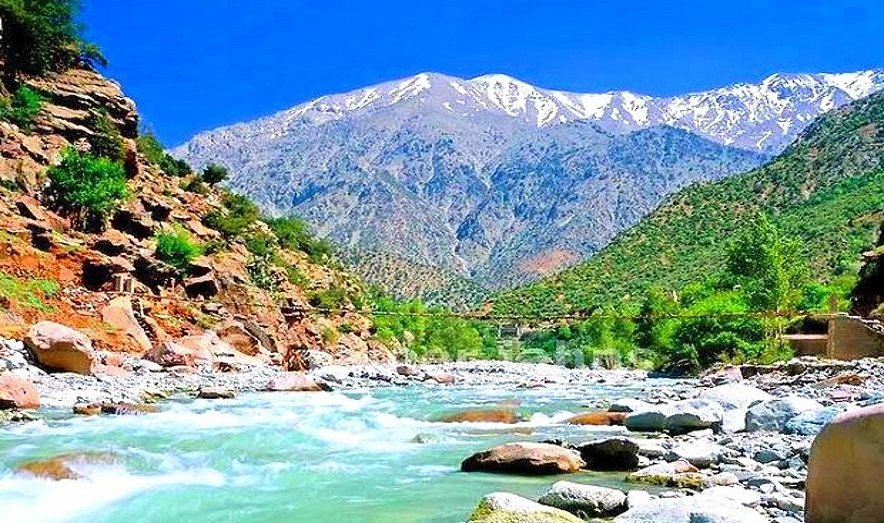
Marrakech moves to a wide, cinematic rhythm. Founded in 1062 by the Almoravids, the city was built on a wide, dusty plain with the snow-dusted peaks of the High Atlas Mountains providing a dramatic backdrop. Space feels more expansive here. The central pulse is Jemaa el-Fnaa, a massive open-air square that shifts seamlessly from morning juice stalls to an open-air spectacle of snake charmers, musicians, and food vendors by nightfall. Beyond the square, wide avenues in the French-designed Gueliz district offer a sharp contrast to the bustling alleys of the old town.
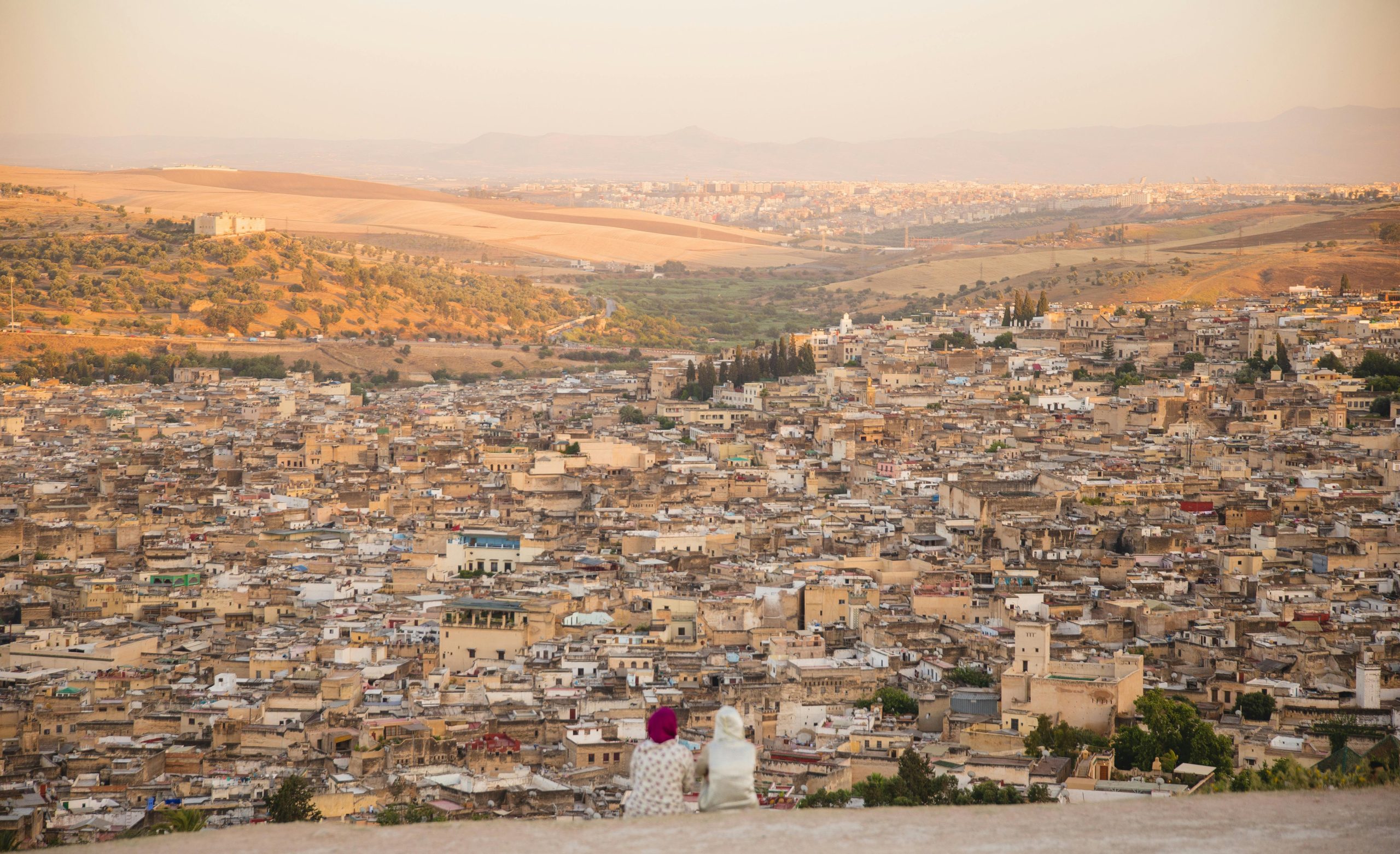
Fez, by contrast, is an exercise in verticality and compression. Established a century earlier in 789 AD by Idris I, Fez el-Bali is the world’s largest living medieval Islamic city and is entirely car-free. You do not wander Fez; you navigate it. The medina plunges down a river valley, creating a dense, multi-layered labyrinth of over 9,000 narrow alleyways where donkeys remain the primary mode of freight transport. Where Marrakech is sun-baked pink clay and wide horizons, Fez is shaded, intimate, and defined by the hum of craftsmanship echoing off ancient stone walls.
Cultural Soul: Design Spectacle versus Living Craft
If your travel style leans toward aesthetic curation, high-end hospitality, and vibrant social energy, Marrakech delivers unmatched sensory impact. The city is a masterpiece of interior design, legendary for its sprawling riads featuring sunlit courtyards and plunge pools, alongside manicured botanical masterpieces like the Majorelle Garden. Palaces such as the Bahia Palace showcase intricate stucco work and fragrant orange groves, while the culinary scene effortlessly bridges traditional Moroccan flavors with contemporary international dining.
Fez is the intellectual, spiritual, and artisanal heartbeat of Morocco. Rather than serving as a polished stage for tourism, it operates as a living, breathing workshop. In neighborhoods unchanged for centuries, master artisans practice trades handed down through generations. You can watch brass-workers beat intricate trays in the Place Seffarine, weavers operate handlooms in dark vaulted spaces, and tanners treat hides at the historic Chouara Tannery using methods dating back to the medieval era. For history enthusiasts, scholars, and lovers of authentic heritage, the intellectual weight of institutions like Al-Qarawiyyin University—founded in 859 AD—gives Fez a profound gravity.
Practical Realities: Navigating the Logistics
Understanding the practical side of these cities helps set realistic expectations for your journey. Marrakech is exceptionally polished for international travelers. Taxis are abundant, high-end restaurants and concept stores are easy to access, and navigating the medina feels intuitive after a day or two. However, the high volume of tourism means you will encounter persistent hustle and aggressive sales pitches, particularly around the souks.
Fez requires a higher degree of patience and local navigation skills. Because the medina is a vehicle-free zone of dizzying complexity, hiring a local, licensed guide for your first day is essential rather than optional. The pace here is slower, and while locals are deeply welcoming, the tourist infrastructure is less commercialized. Street vendors are generally less aggressive than in Marrakech, allowing for a more contemplative, unhurried exploration.
When planning your route, note that traveling between the two cities requires a significant commitment. The distance is approximately 500 kilometers. A train journey via the national rail network (ONCF) takes roughly 6.5 hours, while driving via the modern highway system takes about 5 hours. Because of this distance, trying to day-trip between them is impossible; they demand dedicated, unhurried time.
Budget and Pacing on the Ground
Both cities accommodate a wide range of budgets, though the financial ecosystem reflects their distinct personalities. In Marrakech, expect to pay premium prices for rooftop cocktails, designer riads, and upscale dining in the Hivernage or Gueliz districts. A comfortable sit-down meal at a nice medina restaurant generally runs between 150 to 300 MAD (approx. 15 to 30 EUR) per person, while standard riad stays vary widely based on luxury tiers.
Fez generally offers better value for accommodation and dining, particularly when it comes to historic properties. Splurging on a historic palace-riad in Fez often buys more square footage and antique detailing than a comparable property in Marrakech. Street food and traditional local eateries are also modestly priced, with hearty tagines costing around 40 to 70 MAD (approx. 4 to 7 EUR).
Making Your Choice
Ultimately, Marrakech is for the traveler who seeks vibrant social energy, contemporary luxury, and immediate visual drama under big skies. Fez is for the traveler who craves historical immersion, authentic artisanal culture, and the quiet thrill of getting lost in a medieval maze. Many travelers try to pick just one, but the true magic of Morocco lies in experiencing how these two imperial cities complement one another.
To experience the distinct character of Fez and the wider imperial heartland without the stress of logistics, our team at Morocco Moment Tours designs bespoke, private journeys tailored entirely to your personal travel style and pace.