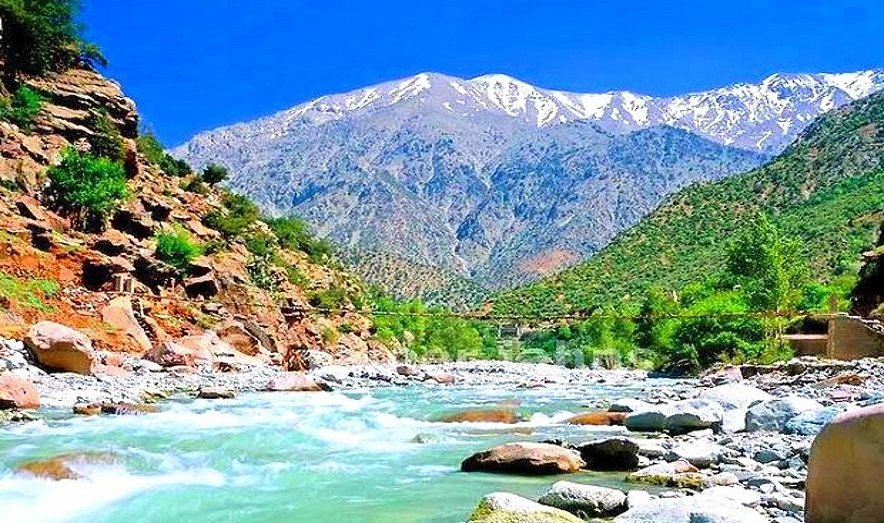
Leaving the vibrant chaos of the Fes medina behind, the road snakes south through the Saïss plain before beginning the slow, dramatic ascent into the High Atlas. For travelers seeking a deeper connection to Morocco beyond the imperial cities and the dunes of the Sahara, the Atlas Mountains offer an essential counter-narrative. This is a landscape shaped by ancient geological forces and Berber communities who have farmed these steep valleys for centuries.
The Journey into the Imlil Valley and Foothills
The drive from Fes to the primary Atlas hiking hubs, such as the Imlil Valley near Mount Toubkal, takes approximately six and a half to seven hours via the main arterial highway passing Rabat and Casablanca, or cutting inland through Beni Mellal. Most travelers visiting with private logistics base themselves initially in Marrakech for a shorter two-hour transfer to the foothills, though bespoke itineraries often bridge the cultural gap by connecting Fes directly to the mountains via the Middle Atlas cedar forests of Azrou.
Imlil sits at roughly 1,740 meters above sea level and serves as the principal gateway for trekkers. As the tarmac ends and the footpaths take over, the air noticeably cools, carrying the scent of wild thyme and juniper. From here, trails branch out into the Azzaden Valley or wind upward toward the Toubkal refuge at 3,207 meters. For moderate day hikes, a five-hour circuit linking Imlil to the outlying hamlets of Armed and Targa Imelhane provides an ideal introduction to the terrain, featuring well-worn mule tracks and terraced walnut groves irrigated by intricate networks of stone channels.
Experiencing Daily Life in an Authentic Berber Village
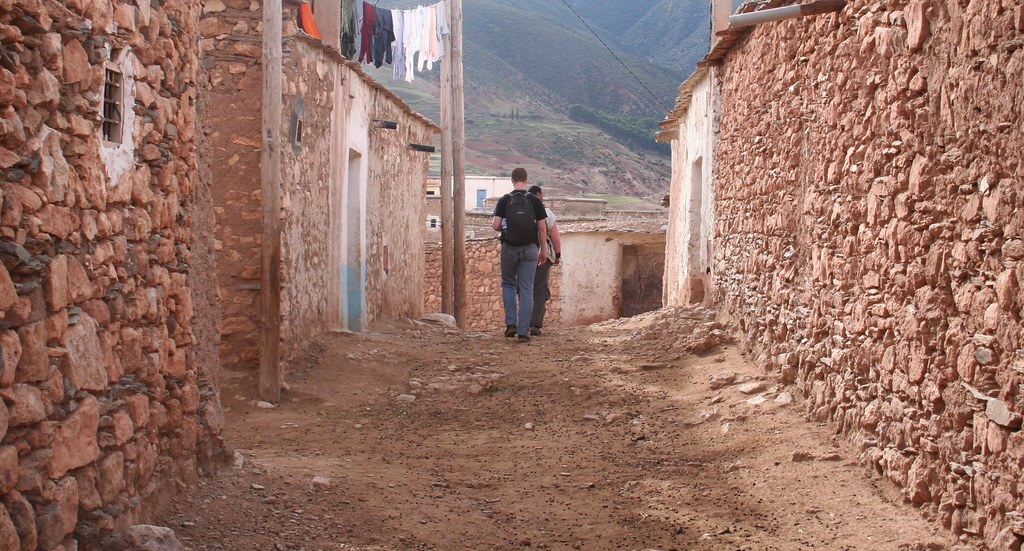
The true reward of an Atlas trek lies not in the altitude reached, but in the intimacy of the mountain settlements. Villages like Aït Souka, Tachdirt, and Imsker cling precariously to steep schist and sandstone slopes. Architecture here is entirely utilitarian and vernacular; houses are built from local stone and beaten earth, designed to absorb solar heat during harsh winters and keep interiors cool against the summer glare.
Staying overnight in a traditional village guesthouse transforms the experience from a scenic walk into a cultural immersion. Unlike standard hotels, these family-run establishments—often referred to locally as gites d’étape—offer a glimpse into domestic life. Evenings center around the hearth, where hosts prepare communal meals of slow-cooked chicken or lamb tagine, heavily spiced with ginger, saffron, and cumin, served alongside mountains of semolina couscous and freshly baked flatbreads cooked in communal clay ovens. Mint tea, poured from a height to create a frothy crown, punctuates every conversation, offering a moment of quiet connection despite language barriers.
Practical Realities and Trail Etiquette on the Mountain
Hiking in the High Atlas demands respect for the environment and local customs. Weather can shift rapidly; while afternoons are warm and blindingly bright between May and October, mountain passes can experience freezing temperatures and sudden storms outside of peak summer.
- Logistics and Guides: While independent day walks around Imlil are straightforward, hiring a local, officially certified mountain guide (guide de montagne) is strongly recommended for multi-day traverses or summit attempts. Official guides possess intimate knowledge of weather patterns, trail conditions, and local families. Daily rates for a certified guide typically range from 400 to 600 MAD (approx. 40 to 60 EUR) per day. Mules and muleteers (muleiers) can be hired for roughly the same daily rate to carry heavy packs, ensuring your trek remains comfortable.
- Cultural Protocols: Berber communities are exceptionally welcoming, but modesty is paramount. Dress conservatively, keeping shoulders and knees covered, particularly when passing through villages. Always ask for permission before photographing local residents, and carry small denomination coins (2 to 10 MAD) if you wish to purchase handmade crafts, walnuts, or freshly squeezed orange juice from roadside vendors.
- Health and Gear: Tap water in mountain villages is generally untreated; rely on bottled water, purification tablets, or a filtered water bottle. Sturdy, broken-in hiking boots with good ankle support are non-negotiable, as limestone scree and steep slate paths can be treacherous underfoot.
Sustainable Tourism and Giving Back Responsibly
As tourism increasingly penetrates these remote valleys, the environmental and economic footprint of travelers matters more than ever. Opting for locally owned accommodations and hiring neighborhood guides ensures that tourist revenue stays directly within the community rather than leaking to external agencies. Simple actions—such as carrying out all plastic waste, avoiding single-use bottles where possible, and respecting local water conservation efforts during dry seasons—help preserve the fragile mountain ecosystem for the generations of herders and farmers who call the Atlas home.
To experience the High Atlas Mountains and authentic Berber village hospitality seamlessly integrated into a bespoke itinerary from Fes, reach out to our team at Morocco Moment Tours to design your private journey.