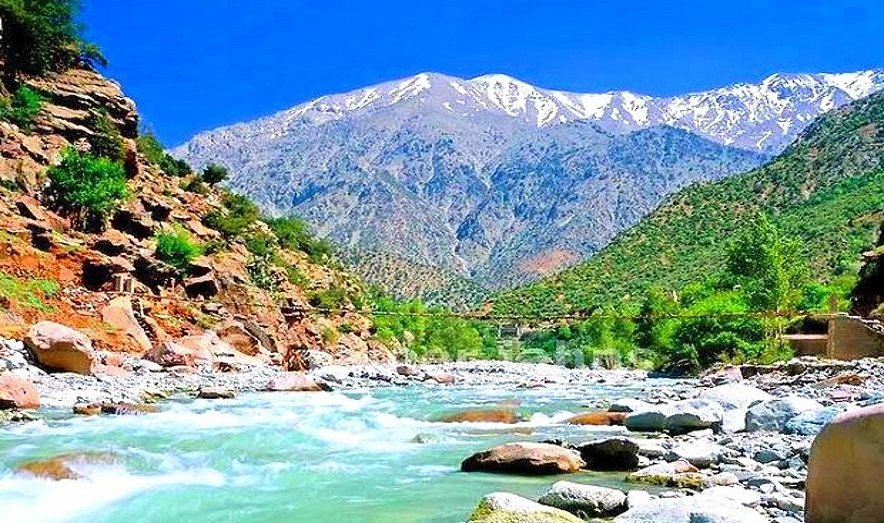
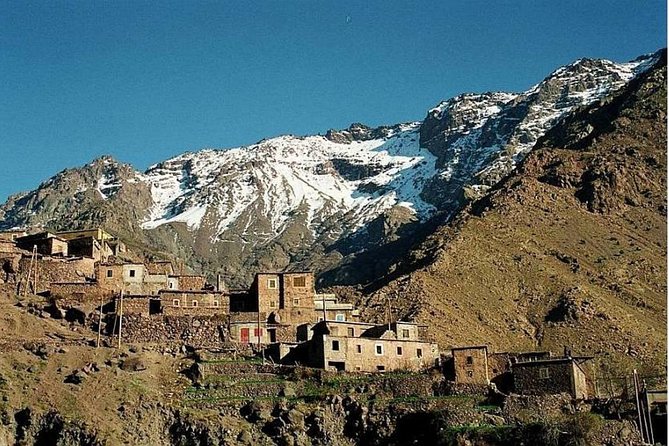
Striking the balance between jagged peaks and sudden, lush river corridors, the valleys of the High Atlas are where Morocco’s dramatic landscape softens into cascading walnut groves, traditional pisé villages, and terraced agricultural fields. For travelers looking to step away from the Medina bustle of Fes or Marrakech, these mountain arteries offer profound stillness and timeless Berber culture. Yet, because elevation dictates everything here, timing your journey is critical. A valley floor that feels like spring in April can be deeply frozen in January or scorching in July.
Spring: The Season of Almond Blossoms and Rushing Waters (March to May)
Spring is widely considered the prime window for exploring the Atlas valleys, particularly the Ourika, Asni, and the broader Toubkal massif. As winter snows melt on the high peaks, rivers swell with crystal-clear water, feeding the valley floors just as millions of almond and fruit trees burst into white and pink blossoms.
During April and May, daytime temperatures hover comfortably between 20°C and 25°C, making it ideal for day hikes between villages like Imlil or checking out the weekly Berber market in Asni. However, evenings retain a sharp alpine chill, often dropping to 8°C or lower. Be prepared for occasional spring showers, which turn the hillsides an intense, vibrant green rarely seen later in the year.
For travelers coming from Fes, a journey to the High Atlas in spring requires a full travel day. Taking the train to Casablanca or Marrakech and then hiring a private vehicle to the foothills—roughly a 90-minute drive south of Marrakech to reach Imlil—ensures a seamless transition without wrestling with grand taxi schedules. A standard private transfer from Marrakech to Imlil generally costs around 400 to 600 MAD (approx. 35 to 55 EUR) depending on the vehicle.
Autumn: Golden Harvests and Stable Skies (September to November)
If you prefer deep, earthy colors and stable, dry weather, autumn is arguably the most rewarding time for a mountain escape. September marks the walnut and apple harvest across the valleys, transforming places like the Ourika and the remote Ait Bouguemez valley into bustling hubs of rural activity. The air is exceptionally clear, offering unobstructed views of craggy ridgelines against deep blue skies.
Temperatures in September and October remain very pleasant, averaging 22°C during the day, though November introduces a noticeable cooling trend as autumn transitions quickly toward winter. By late November, the higher passes can experience their first dustings of snow.
Autumn is also an exceptional season for cultural immersion. With the summer heat gone and winter isolation still weeks away, local cooperatives and guesthouses are unhurried. Hiring a local mountain guide for a day trek through the valley terraces typically costs around 300 to 500 MAD (approx. 30 to 50 EUR), a modest investment that grants you access to ancestral paths and insider knowledge of the valley’s intricate irrigation systems.
Summer: Escaping the Plains into High Altitude Cool (June to August)
While Marrakech and the imperial lowlands swelter in 40°C-plus heat waves, the higher Atlas valleys offer a reliable refuge. Places sitting above 1,800 meters of elevation—such as Oukaïmeden or the upper reaches of the Zat Valley—enjoy significantly milder conditions, with daytime temperatures hovering around 28°C to 32°C and significantly lower humidity.
However, summer travel requires specific pacing. The midday sun is intensely direct at high altitudes, meaning serious hiking must start early in the morning, typically by 7:00 AM, to avoid exhaustion. This is also the peak period for domestic tourism, as Moroccan families head to the mountains to escape the urban heat. Riversides in popular spots like Setti Fatma in the Ourika Valley become lively picnic zones on weekends. If you seek solitude, summer is the time to bypass the main tourist arteries and venture deeper into the remote Western High Atlas or the less-visited eastern slopes.
Winter: Snowscapes and Hearthside Quiet (December to February)
Winter in the Atlas is not for the casual walker, but it holds a stark, cinematic beauty. Snow blankets the peaks above 2,000 meters, closing high mountain passes like Tizi n’Tichka intermittently after heavy storms. Daytime temperatures in the valleys frequently struggle to reach 12°C, and nights regularly drop below freezing.
For culture enthusiasts and landscape photographers, however, winter reveals the authentic rhythm of mountain life. Villages empty of day-trippers, smoke curls steadily from stone hearths, and families gather indoors. Guesthouses in villages like Imlil or Armed are cozy, often featuring traditional wood-burning stoves and hearty Berber tagines slow-cooked over coals. A night in a comfortable local guesthouse with dinner and breakfast included generally ranges from 400 to 800 MAD (approx. 40 to 75 EUR) per room. Be advised that proper thermal layers, sturdy waterproof boots, and flexible itineraries are mandatory, as winter weather can alter mountain roads with little warning.
At Morocco Moment Tours, we design bespoke private journeys that take the guesswork out of navigating the Atlas Mountains, ensuring your travel dates align perfectly with the weather and experiences you desire.