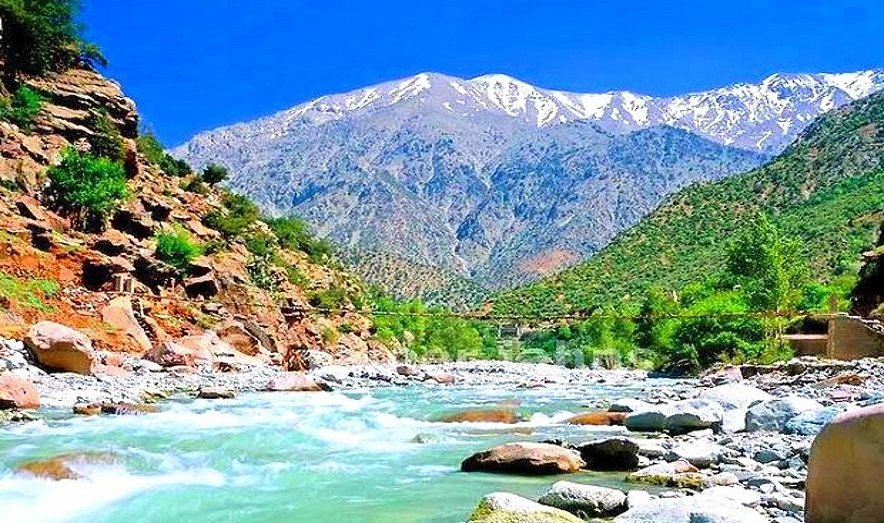
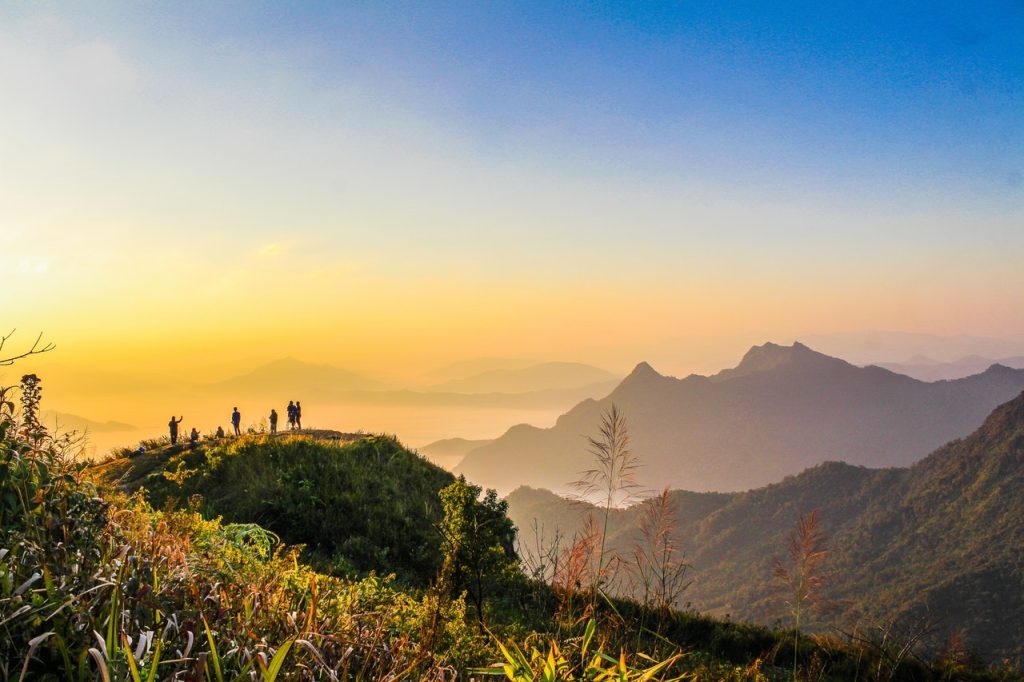
Rising before dawn in the High Atlas is an exercise in quiet devotion. As the morning chill bites through your jacket at 2,000 meters above sea level, the landscape undergoes a cinematic transformation. Deep indigo shadows bleeding across jagged limestone peaks slowly give way to alpenglow, washing ancient Berber villages in molten copper and rose gold. For landscape photographers, this mountain range offers some of the most dramatic lighting on the African continent, provided you know where to point your lens and when the light hits the peaks.
The Tichka Summit Vistas: Col du Tichka
The journey from Marrakech toward the desert inevitably crosses the Tizi n’Tichka pass, cresting at 2,260 meters. While most tour buses rush through this high-altitude mountain pass mid-morning enveloped in tourist traffic, arriving here at first light reveals an entirely different world.
Park your vehicle safely in one of the wider gravel pull-offs roughly two kilometers west of the actual summit pass. Facing southeast toward the Telouet valley, the staggered switchbacks of the N9 highway carve graphic leading lines through the barren landscape. The best composition here relies on setting up your tripod low to capture the frost-touched shale in the foreground, using the winding road to draw the viewer’s eye toward the jagged horizon as the first rays punch through the mountain gaps.
Practical Details: The pass is approximately 100 kilometers from Marrakech and about 200 kilometers from Ouarzazate. In the winter months (December to February), temperatures regularly drop below freezing at dawn, so pack thermal layers and gloves that allow you to adjust camera dials. There are no fees for roadside photography, but always keep a few small denomination dirham coins handy if local shepherds or road-workers approach for a friendly chat or to share a glass of roadside tea.
The Valley of a Thousand Kasbahs: Skoura’s Palm Groves at First Light
Descending the eastern slopes of the High Atlas brings you to the gateway of the desert at Skoura, where an immense oasis of over 700,uros-worth of dense date palms stretches beneath the mountain backdrop. While Skoura is famous for its late afternoon light, dawn offers a misty, ethereal quality that is criminally underutilized by traveling photographers.
Head to the northern perimeter of the palmeraie near the ruined Kasbah Amerhidl. As the sun crests the distant Atlas foothills, long slanting light beams pierce through the vertical trunks of thousands of date palms, illuminating irrigation canals and local farmers moving with their donkeys. Position yourself on the raised earthen paths overlooking the mud-brick ruins to capture the contrast between the lush green canopy and the arid, snow-dusted peaks looming in the background.
Practical Details: Skoura is located 42 kilometers northeast of Ouarzazate along the N10. Access to the outer palmeraie is free and unrestricted. If you wish to enter the beautifully preserved Kasbah Amerhidl for elevated rooftop perspectives of the palm canopy, admission is typically 20 MAD (approx. 2 EUR), payable directly to the caretaker on-site from around 8:00 AM, though exterior pre-dawn photography requires no ticket.
The Dramatic Gorge Walls: Todra Gorge
Deep within the eastern High Atlas, the Todra Gorge features sheer limestone canyon walls that tower up to 300 meters above the shallow riverbed. Because the canyon is exceptionally narrow in places, classic daylight photography can be harsh and contrast-heavy. Dawn, however, is a fleeting window of absolute magic.
Arrive at the narrowest section of the gorge—just past the Hotel le Festival—roughly 30 minutes before official sunrise. At this hour, the towering canyon walls glow with reflected ambient light, transitioning from cold blue tones to a fiery orange as the sun hits the very highest rim of the rock face. Set your tripod in the dry riverbed, utilizing slow shutter speeds to capture the silky motion of the Todra River juxtaposed against the immovable, monumental geometry of the canyon cliffs.
Practical Details: Todra Gorge is situated 15 kilometers inland from the town of Tinghir. The drive from Fes takes approximately six to seven hours via Errachidia, making it an ideal stop on a structured trans-Atlas itinerary. Parking near the gorge floor is informal and generally free, though local parking attendants may ask for 5 to 10 MAD to watch your vehicle. There are no permits required for landscape photography here.
Essential Gear and Mountain Etiquette
Capturing the High Atlas at dawn requires preparation. Batteries drain rapidly in sub-zero morning mountain temperatures; always keep a spare battery in an inside jacket pocket close to your body heat. A graduated neutral density (GND) filter is indispensable for balancing the extreme exposure difference between the brightly lit mountain crests and the shadowed valleys below.
When photographing local Berber communities waking up to begin their daily agricultural routines, always ask permission before taking direct portraits. A polite “salam alaikum” accompanied by a respectful gesture toward your camera goes a long way. If photographing children or private village courtyards, respect a refusal gracefully.
Navigating the winding mountain passes in the dark to reach these vantage points requires local expertise and a reliable vehicle. At Morocco Moment Tours, we design bespoke private itineraries originating from Fes that place you precisely where you need to be, just as the morning light breaks over the Atlas peaks.