
Stepping into the medina of Marrakech for the first time is an immediate assault on the senses. The air thickens with woodsmoke and toasted cumin, the labyrinthine alleys buzz with merchants and motorbikes, and iron cauldrons steam under the midday sun. For the uninitiated, navigating this culinary maze can feel overwhelming. Yet, beneath the sensory chaos lies one of the world’s great culinary traditions—a complex blend of Berber staples, Arab spices, and Andalusian influences. As local guides based out of Fes who regularly lead private expeditions across the Atlas and down to the Red City, we always tell our travelers that you haven’t truly experienced Marrakech until you have eaten on its streets. Here are the five essential dishes every first-time visitor needs to try, along with the real places to find them.
The Slow-Cooked Masterpiece: Marrakech Tangia
While northern Morocco is famous for its tagine, Marrakech has its own signature slow-cooked dish with a fascinating history: the tangia. Traditionally prepared by bachelors and merchants, this dish features chunks of beef or lamb seasoned with preserved lemons, garlic, saffron, cumin, and a splash of olive oil, all sealed inside a terracotta jar. The pot is then dropped off at the neighborhood farran, or communal wood-fired oven, and left to bake in the embers for up to six hours alongside the public baths. The meat emerges meltingly tender in a rich, gelatinous sauce.
Head deep into the spice souks to find Stall 49 at Souk Cherifia or seek out one of the traditional neighborhood spots near the Mellah. A hearty portion served with warm crusty bread will cost around 60 to 90 MAD (6 to 9 EUR). It is heavy, rich, and best eaten with your right hand using bread to scoop up the sauce.
The Ultimate Street Food: Mechoui Alley
Tucked away in a smoky, unassuming alley just off the northwestern corner of Jemaa el-Fnaa square lies Marrakech’s most legendary carnivore destination: Mechoui Alley. Here, whole lambs are lowered vertically into deep pit ovens lined with burning eucalyptus wood and roasted underground for hours until the skin turns golden and crisp, and the meat falls effortlessly off the bone.
There are no menus here. You simply walk up to one of the open-fronted stalls, point to the amount of meat you want, and the butcher will weigh it on a battered scale, chop it up on a wooden block, and slide it onto a sheet of butcher paper. It is served simply with a mound of cumin, salt, and hot bread. Expect to pay about 150 to 200 MAD (15 to 20 EUR) per kilo, which easily feeds two to three people. Go between 11:00 AM and 1:00 PM for the freshest batch straight from the underground ovens before they sell out for the day.
The Feasting Staple: Traditional Lamb or Chicken Tagine
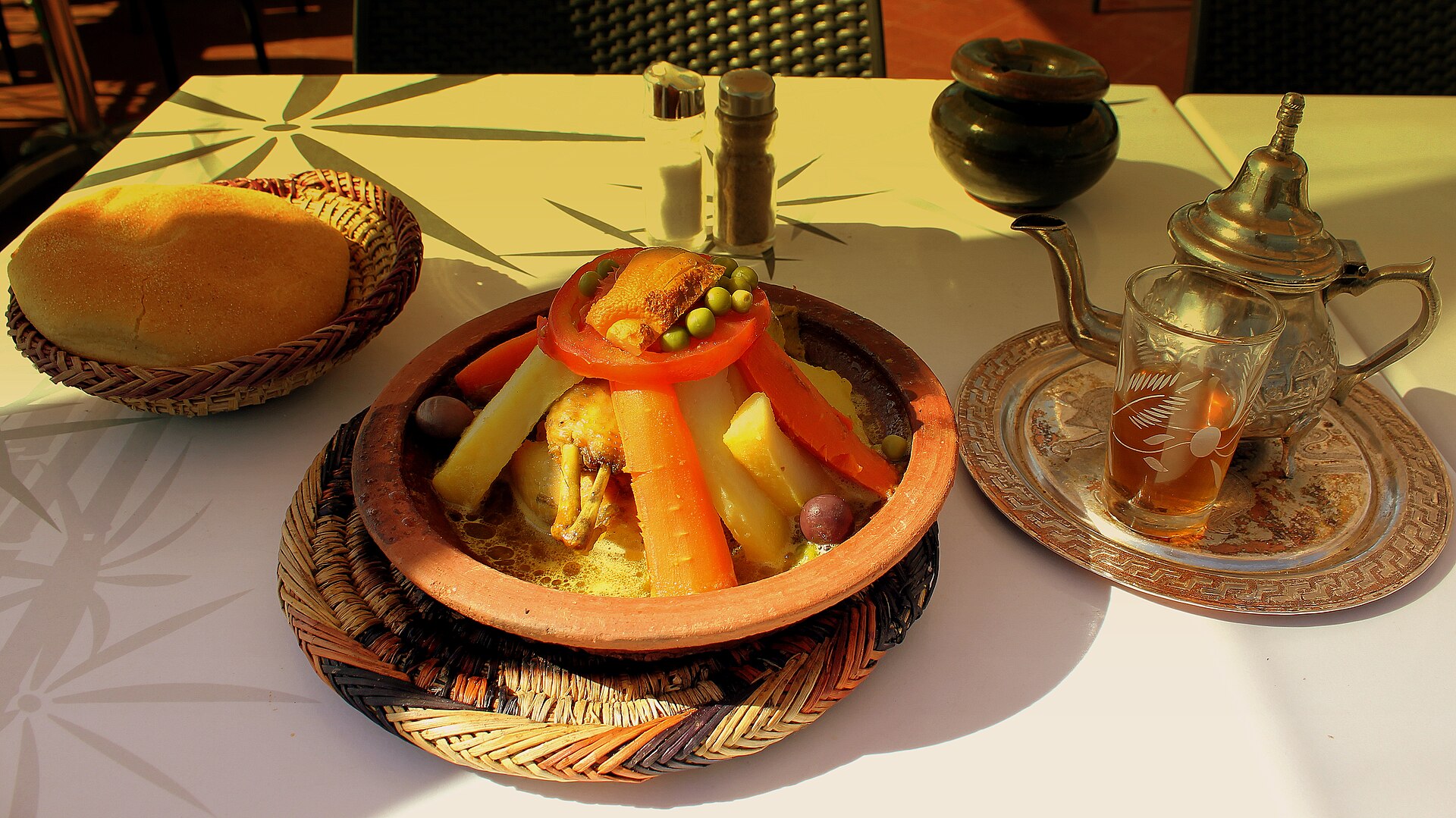
You cannot visit Morocco without eating tagine, named after the iconic conical earthenware vessel in which it is cooked. While you can find tagines across the country, Marrakech versions often lean heavily into sweet-and-savory combinations, such as lamb with prunes, almonds, and sesame seeds, or chicken preserved with lemon and green olives. The conical lid traps the steam, returning the moisture to the ingredients and infusing the meat with deep aromatic layers.
For a reliable, sit-down experience in a gorgeous riad setting without tourist-trap pricing, try Café Arabe in the Mouassine district, or venture slightly outside the bustling center to Al Fassia, renowned for authentic recipes handed down through generations of women. A proper slow-cooked tagine at a reputable sit-down restaurant will typically range from 90 to 140 MAD (9 to 14 EUR). Allow at least forty minutes for preparation if you are ordering off-peak, as good tagine is never rushed.
The Street-Side Breakfast: Bissara
While most tourists associate Moroccan food with grand dinners, some of the country’s finest comfort food is consumed at dawn. Bissara is a thick, velvety soup made from dried split fava beans or peas, simmered for hours with garlic and cumin. Ladled into a shallow bowl, it is finished with a generous swirl of raw, green local olive oil and a heavy dusting of cumin and paprika.
It is a thick, protein-packed breakfast staple designed to fuel local workers through the morning. You will find carts and tiny storefronts serving it across the medina, particularly near Bab Doukkala around 8:00 AM to 10:00 AM. A bowl costs practically nothing—usually around 5 to 10 MAD (under 1 EUR)—and comes with a round of freshly baked flatbread straight from the neighborhood oven. It is earthy, deeply warming, and deeply authentic.
The Sweet and Savory Icon: Pastilla
Bridging the gap between pastry and main course, the pastilla (or bastilla) is a culinary marvel born of Andalusian-Moroccan heritage. It consists of layers of gossamer-thin, paper-like pastry known as warka wrapped around a filling of shredded pigeon or slow-cooked chicken, seasoned with saffron, ginger, onions, and fresh herbs, layered with toasted almonds, and heavily dusted with cinnamon and powdered sugar. The result is a startling, magnificent contrast of crisp, flaky pastry with sweet, savory, and spiced meat.
While traditional pigeon pastilla is often reserved for weddings and formal celebrations, excellent individual chicken pastillas are widely available. Stop by Nomad in the Spice Square for a modern rooftop interpretation, or seek out a traditional spot in the Gueliz district for classic homestyle cooking. Prices generally range from 70 to 120 MAD (7 to 12 EUR) depending on the venue.
Navigating the vibrant culinary landscape of Marrakech can be an incredible adventure, but finding the truly authentic spots away from the tourist crowds requires local insight. At Morocco Moment Tours, we design bespoke, private journeys that connect you deeply with the culture, history, and flavors of Morocco, ensuring your culinary discoveries are as seamless as they are unforgettable.