Steeped in imperial grandeur and nestled against the foothills of the Middle Atlas, Meknes is often overshadowed by its flashier neighbor, Fes. Yet, this UNESCO-listed city offers a quieter, more contemplative journey into Morocco’s royal past. Just a short drive away lies Volubilis, the most striking Roman archaeological site in North Africa. Together, they form a compelling 72-hour itinerary that bridges ancient Mediterranean history and monumental Moroccan architecture.
Day 1: The Imperial Vision of Moulay Ismail
Begin your journey in the heart of Meknes, specifically at Bab El-Mansour, arguably the most magnificent gate in North Africa. Commissioned by the ruthless yet visionary 17th-century Sultan Moulay Ismail—who fancied himself the Moroccan Louis XIV—the gate dazzles with its intricate green and white zellij tilework and imposing marble columns looted from the nearby Roman ruins of Volubilis. Stand across the vast expanse of El Hedim Square to take it all in; unlike the chaotic frenzy of Marrakech’s Jemaa el-Fnaa, this square breathes at a more relaxed, provincial pace.
From the square, venture into the sprawling Royal Stables and Granaries (Heri es-Souani). At its peak, this architectural marvel housed up to 12,000 royal horses, complete with an ingenious subterranean water-cooling system that kept the livestock comfortable even in the scorching summer heat. A typical entrance ticket costs around 70 MAD (roughly 7 EUR), and hiring an official guide at the gate will cost an extra 150 to 200 MAD, well worth it to untangle the history of the Alaouite dynasty. Conclude your afternoon with a quiet stroll through the Royal Golf course area or enjoy a mint tea on a terrace overlooking the vibrant medina rooftops.
Day 2: A Step Back in Time at Volubilis and Moulay Idriss
On your second morning, arrange for a grand taxi or private driver to take you northwest toward the Zerhoun massif. The drive takes roughly 45 minutes, covering about 30 kilometers through fertile rolling hills blanketed in olive groves. By 9:00 AM, arrive at the UNESCO World Heritage site of Volubilis before the midday heat sets in.
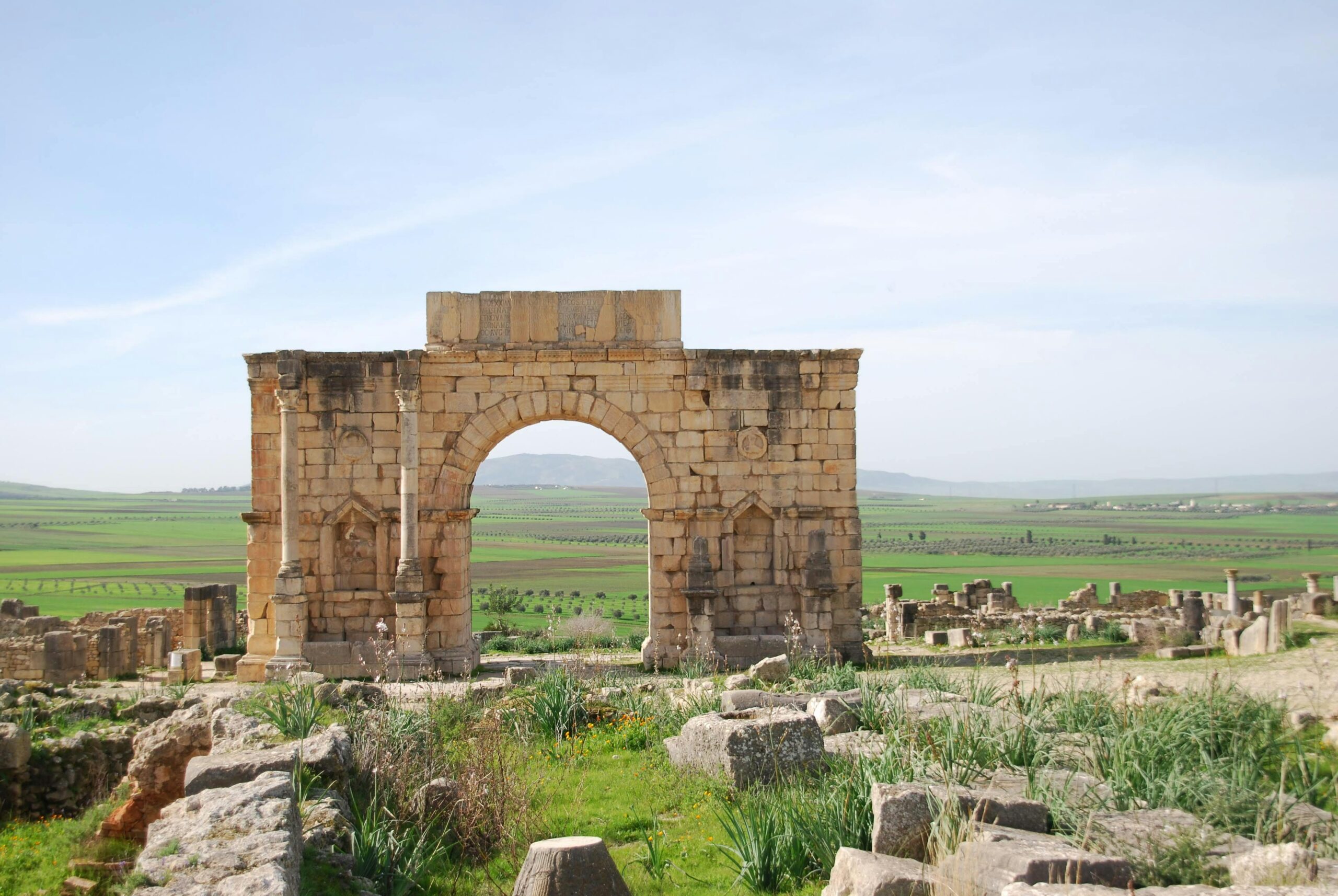
Walking through the triumphal arches, basilicas, and elite merchant villas feels like stepping onto an open-air stage. Unlike many European archaeological sites, Volubilis allows you to wander relatively unfettered among remarkably preserved mosaic floors depicting mythological scenes like the Labors of Hercules and Diana bathing. Entrance is 70 MAD, and licensed local guides wait near the ticket office offering tours in English, French, and Spanish.
By midday, make the quick ten-minute drive to the holy town of Moulay Idriss Zerhoun, perched dramatically over two craggy hills. Non-Muslims cannot enter the central shrine containing the tomb of Islam’s founder in Morocco, but wandering the steep, sun-drenched alleys offers a genuine glimpse into small-town Moroccan life. Stop for a leisurely lunch at a local rooftop restaurant, sampling tagines flavored with local olives and citrus, before heading back to Meknes for the evening.
Day 3: Hidden Medinas and Artisan Workshops
Dedicate your final day to the Meknes medina, which is notably less commercialized and more intimate than those of Fes or Marrakech. Start at the Dar Jamai Museum, a magnificent late-19th-century palace that showcases regional Moroccan arts, including exquisite carpets, ceramics, and traditional woodwork. The museum opens into an Andalusian-style garden that provides a serene sanctuary away from the street bustle.
Spend your afternoon exploring the Lalla Aouda esplanade and the local souks. Unlike the tourist-heavy shopping lanes elsewhere, the souks here cater primarily to locals, meaning you will find authentic craftsmanship—from wrought-iron lanterns to hand-woven textiles—without the high-pressure sales tactics. Pay a visit to the Bab Berdaiyin quarter to observe traditional pottery and leather work. As the sun begins to set, casting a warm golden hue over the high pise-rammed earthen walls of the city, find a quiet spot near the Moulay Ismail Mausoleum to reflect on three days spent traversing centuries of civilization.
Practical Advice for Travelers
Navigating Meknes and Volubilis independently requires a bit of logistical patience. While getting between Meknes and Fes is effortless via the national ONCF train network—taking just 35 minutes and costing around 22 to 38 MAD for a second-class ticket—public transport to Volubilis is notoriously unreliable. To maximize your time, hiring a private vehicle with a driver for the Volubilis day trip is the most efficient choice, usually ranging from 400 to 600 MAD for a half-day hire. Accommodation in Meknes leans heavily toward traditional riads tucked into the medina, where authentic hospitality and homemade breakfasts set the tone for each day. Dress modestly, particularly when visiting Moulay Idriss, and always carry small cash notes (dirhams) for entry fees, tipping guides, and purchasing fresh produce at the local markets.
To experience the seamless blend of imperial history and Roman ruins without the logistical stress of navigating transport and guides on your own, consider joining one of our private tours based out of Fes, where our local experts curate every detail of your journey through northern Morocco.