Morocco’s imperial cities hold the culinary memory of dynasties, trade routes, and palace kitchens. Yet, a deep divide exists between the North and the South when it comes to the plate. While Marrakech trades on high-energy spectacle and global fusion, Fes remains the uncompromising guardian of ancient Andalusian-Moroccan gastronomy. For the traveler seeking the true taste of the imperial era, understanding this dichotomy is the first step to an authentic culinary journey.
The Palace Kitchens of Fes: Guardians of Andalusian Refinement
Step through the brass-studded doors of a restored riad in the Fes el-Bali medina, and you enter a culinary time capsule. When the Moors and Jews were expelled from Spain in the late 15th century, they brought their sophisticated culinary traditions to Fes, blending them with local Berber and Arab techniques. The result is a cuisine defined by nuance, patience, and the delicate marriage of sweet and savory.
In Fes, food is rarely rushed. Take bastilla (or pastilla), the quintessential Fesian masterpiece. Unlike the hurried versions found elsewhere, an authentic Fesian pigeon or squab bastilla requires hours of preparation. Layers of translucent, paper-thin warqa pastry encase slow-cooked, saffron-infused meat, aromatic herbs, and a crunchy filling of almonds dusted with cinnamon and powdered sugar. It is a dish born of royal courts, where chefs competed to surprise rulers with optical illusions of savory meat disguised as dessert.
To experience this firsthand, reserve a table at The Ruined Garden, nestled in the Talâa Seghira neighborhood, or book an exclusive dining experience at Dar Roumana, where historical recipes are reinterpreted with seasonal local produce. Expect to pay around 150 to 250 MAD (approx. 15 to 25 EUR) for a multi-course traditional meal in such settings, where the ambiance matches the historical weight on your plate.
The Spice-Road Crucible: Marrakech and the Djemna el-Fna
Travel south across the Atlas mountains, and the culinary philosophy shifts dramatically. Marrakech was a bustling crossroads for caravans arriving from Sub-Saharan Africa, bringing with them robust spices, fiery chili pastes, and a preference for direct, bold flavors.
The heart of Marrakshi street food beats loudest in Jemaa el-Fna square. As dusk falls, smoke rises from dozens of open-air stalls grilling lamb brochettes, merguez, and sheep’s head. It is an exhilarating, visceral experience, but one that caters heavily to the masses. For true historical depth in Marrakech, you must look beyond the square to the slower-paced tanjia.
Named after the terracotta urn in which it is cooked, tanjia is famously known as the bachelor’s stew or the accountant’s meal. Traditionally prepared by men, chunks of beef or lamb are seasoned with preserved lemons, garlic, cumin, saffron, and a generous dollop of smen (aged, fermented butter), then sealed with parchment paper. The urn is taken down to the neighborhood wood-fired public oven (ferran) and buried in the hot embers for up to six hours. Savoring this meltingly tender meat at a local spot like Café des Épices or tucked away in the Mellah costs roughly 60 to 90 MAD (6 to 9 EUR) and offers a direct link to the city’s merchant past.
Tangine Divides: Slow Embers versus Modern Plates
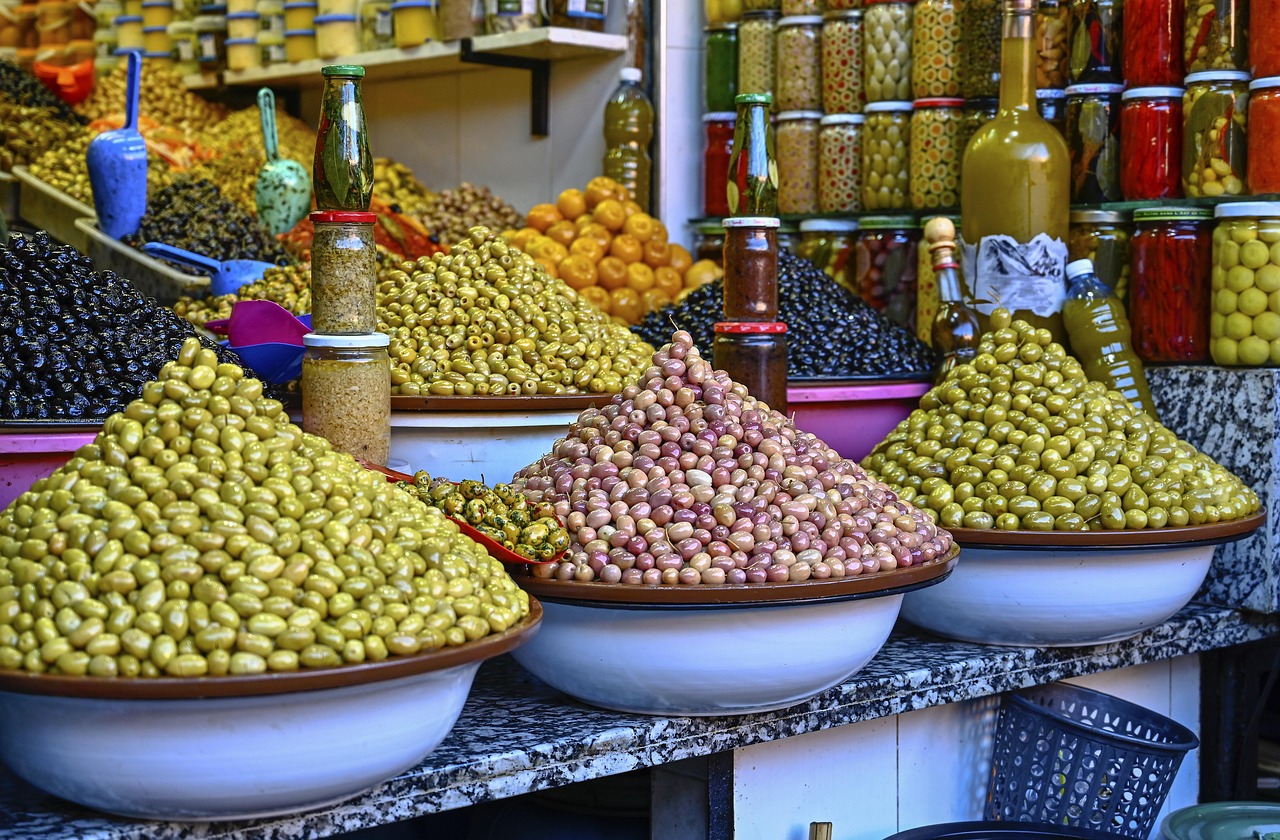
The foundational dish of Morocco—the tagine—tells a story of geography and tradition in both cities. In Fes, tagines lean heavily into orchards and gardens. You will encounter combinations like veal with cardoon or artichoke hearts, or chicken with preserved lemons and green olives, cooked over smoldering olive-wood charcoal in traditional conical earthenware. The sauce is velvety, reduced until it coats the back of a spoon, demanding to be scooped up with fresh, crusty khobz baked in communal neighborhood ovens.
Marrakech, by contrast, embraces the arid heat of the Haouz plain. Tagines here often feature dried fruits—prunes, apricots, and raisins—caramelized in honey and topped with toasted sesame seeds and fried almonds. It is a heavier, sweeter profile influenced by nomadic desert traditions.
For the modern traveler navigating these two culinary capitals, logistics play a vital role. Moving between them involves a scenic four-hour train ride or a comfortable private transfer across the Atlas via Beni Mellal, roughly 530 kilometers of changing landscapes that mirror the shift in flavors on your plate.
Navigating the Medina Tables: Practical Advice
Finding authenticity requires looking past tourist menus translated into five languages. In Fes, the best food is often hidden behind unmarked wooden doors in the old medina; if a restaurant does not require advance booking for dishes like bastilla, approach with caution, as true versions are made from scratch.
In Marrakech, beware of aggressive touts in the tourist hubs. For genuine local flavors, venture into the Jewish quarter (Mellah) or the Sidi Abdelaziz neighborhood, where locals eat. Always carry small change in Moroccan Dirhams (MAD); street stalls and traditional bakeries rarely accept cards. While card payments are increasingly common in upscale riads in both cities, having cash on hand ensures you can sample street-side delicacies without hesitation.
To truly understand how history tastes in Morocco, you need more than a reservation; you need context. At Morocco Moment Tours, our private itineraries in Fes and beyond are designed by locals who know the hidden doorways, the master artisans, and the family-run kitchens keeping centuries-old culinary traditions alive. Let us craft a bespoke journey tailored to your palate, ensuring every meal tells an authentic story of the imperial cities.